
Drone Designed for GPS-Denied Mars Conditions Secures
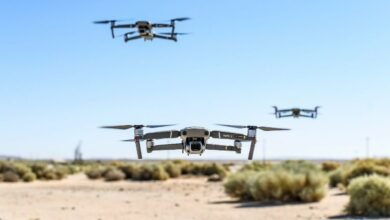
54545 222A groundbreaking student-built drone, engineered to navigate and land in GPS-denied Martian conditions, has secured top honors at the ISRO Robotics Challenge. Unlike Earth, where GPS supports navigation, Mars poses unique challenges with no satellite positioning system and unpredictable magnetic fields. To overcome this, the innovative drone was equipped with visual sensors, optical flow cameras, and LiDAR-based mapping to scan terrain, detect safe landing zones, and autonomously localize itself in real time. Designed on a modest budget, this achievement highlights how cost-effective hardware and smart engineering can power the future of planetary exploration, autonomous UAV navigation, and deep-space missions.
Key features include:
Autonomous Navigation: Operates independently in GPS-denied environments using onboard sensors and AI.
Rugged Design: Built to withstand harsh conditions, extreme temperatures, and dust storms.
Precision Data Collection: Captures high-resolution imagery and environmental data for research and exploration.
Energy Efficient: Optimized for long-duration missions with minimal power consumption.
This innovative drone represents a major leap in planetary exploration technology, enabling scientists to gather critical data on Mars while overcoming the limitations of traditional navigation systems.


